
Find Smithtown Residents From Records
A Smithtown residents directory search works best when it begins with one solid fact: a full name, a Smithtown street address, or a tax-map number. The Town Assessor can connect a parcel to its listed owner and tax correspondence, while the Suffolk County Clerk can connect a party to a recorded deed or mortgage. Those are different findings. A recorded owner may not be a present occupant, and a current non-owner may not appear in either source. Treat every Smithtown hit as a dated record, then compare it with a second independent source.
Use a Smithtown name search when the person is known, an address search when the parcel is known, and library or archive material when the question is historical. A street-based question can move into the fuller Smithtown Street Directory process after the parcel is identified. The practical sequence below keeps the results tied to the correct person or property.
- Search the Smithtown tax portal with one known value, such as an owner name, property address, tax-map number, or bill number.
- Write down the Smithtown situs location, tax-map identifier, listed owner, and mailing field as separate facts.
- Search the Suffolk County Clerk index for Smithtown deeds, mortgages, liens, maps, or business certificates connected to that name or parcel.
- Use the New York voter form only to confirm a known person with the required matching details, not to build an address list.
- When the online trail ends, ask the Smithtown custodian, library, historical society, or records office for the particular existing record needed.
Smithtown Property Search Keys
The Town of Smithtown BAS tax search gives four practical ways into a current parcel record. It accepts one search key at a time. That small rule matters: an owner and an address entered together do not create a combined search. Run each Smithtown search separately and compare the results. The portal asks for a Smithtown property address as a house number and street name without a street type, so a search for a road or avenue should omit that ending.
| Smithtown field | How the portal expects it |
|---|---|
| Bill # | Use the current bill number and leave off digits after a dash. |
| Tax Map # | Keep the town-style punctuation, such as 99.-9-99. |
| Property Address | Enter the house number and street name, without Road, Street, or Avenue. |
| Owner Name | Use last name then first name; a surname-only search can help when a full name fails. |
The Town online-services gateway is a useful starting screen for Smithtown property and municipal records.
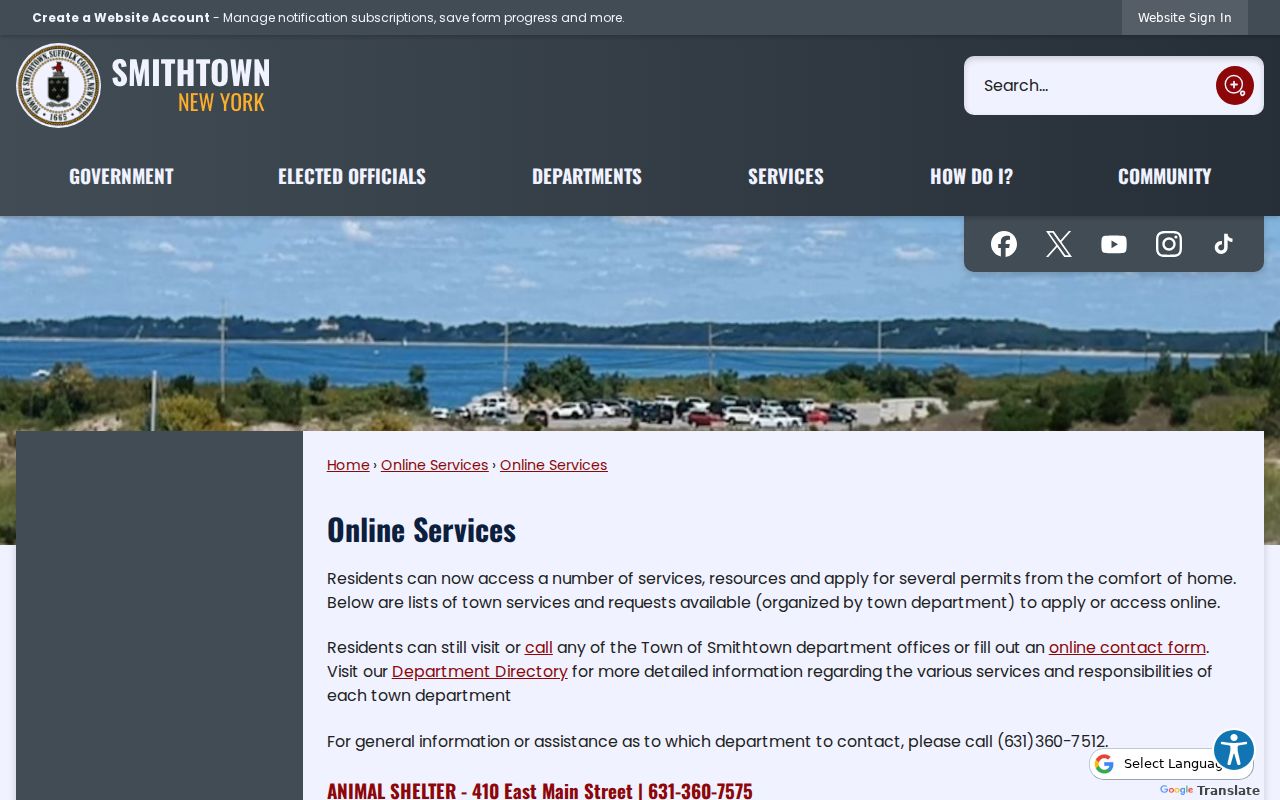
Its service links help distinguish a tax account from permit, clerk, or map records before a search begins.
The Smithtown BAS tax-search screen displays the owner, address, bill, and tax-map entry routes used for a Smithtown parcel search.
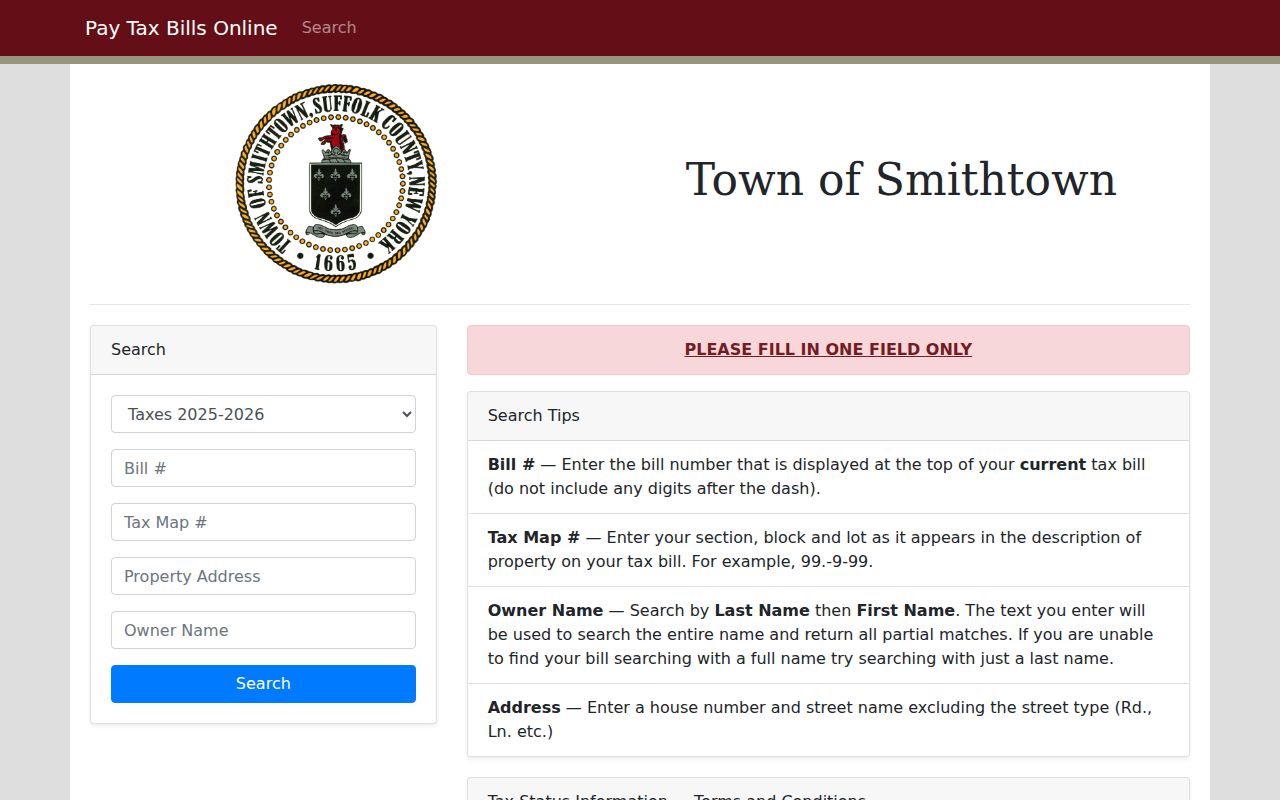
A tax result is a property record. Its owner or mailing field should not be described as proof that a person currently lives at the situs address.
Smithtown Parcels Lead to Deeds
Once a Smithtown parcel has an owner name or tax-map ID, the next Smithtown resident-records step is the Suffolk County Clerk index. Its online land-record search covers 1987 to the present, while County Clerk land custody reaches to the 1660s. A Smithtown search can return deeds, mortgages, liens, judgments, maps, and other indexed filings. Search the present owner as a grantee to find an acquisition record, then use the earlier seller or grantor to move backward through a chain of title.
The Suffolk County Clerk records-search portal shows the public index modes for names, tax maps, book and page, business certificates, court minutes, and maps.
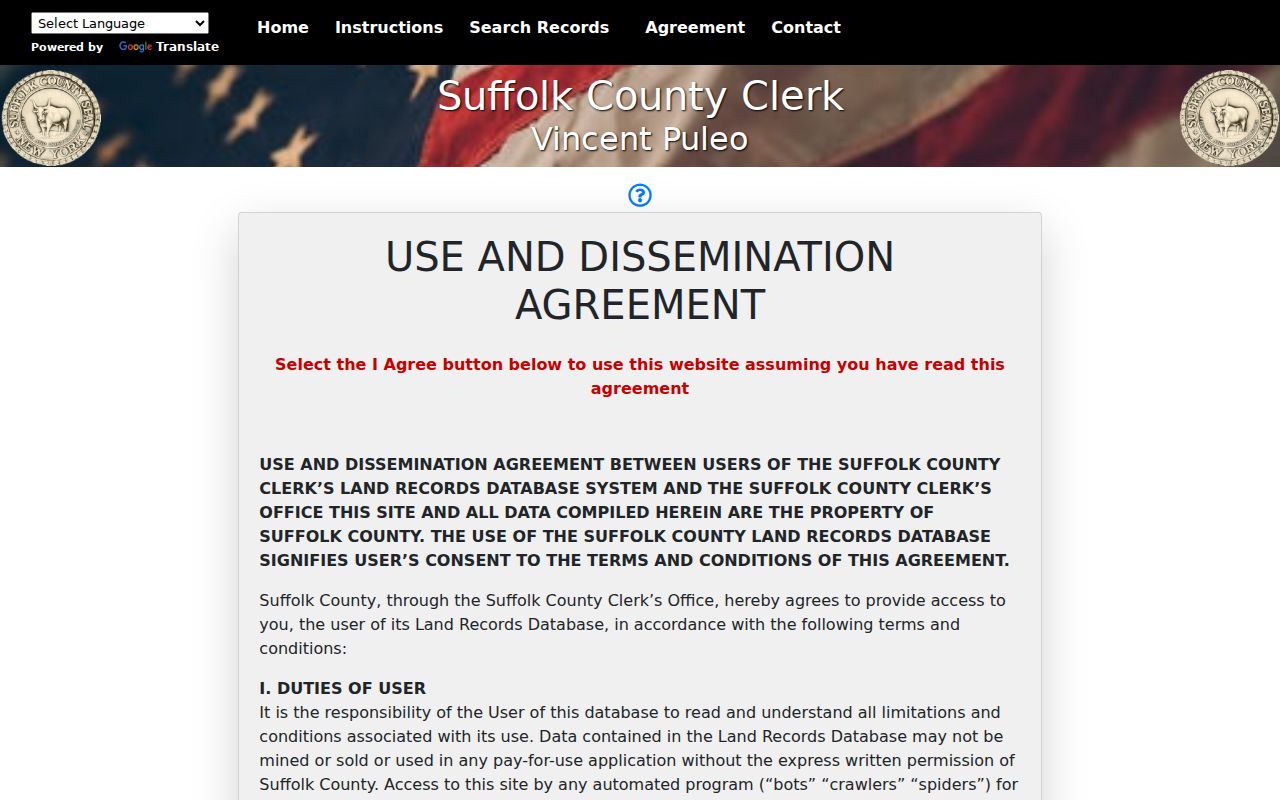
Use the date range and Starts With, Contains, or Exact setting to keep a common Smithtown surname from returning an unmanageable result set.
The Smithtown index search is free, but document images and enhanced access are paid services. Older Smithtown material may instead require a counter search, microfilm or deed-book guidance, Records Management Center help, or a certified-copy request. Note: A recording date marks when an instrument was filed, not necessarily the date a sale closed.
The County Clerk’s enhanced-access information describes the separate path for subscribed document viewing.
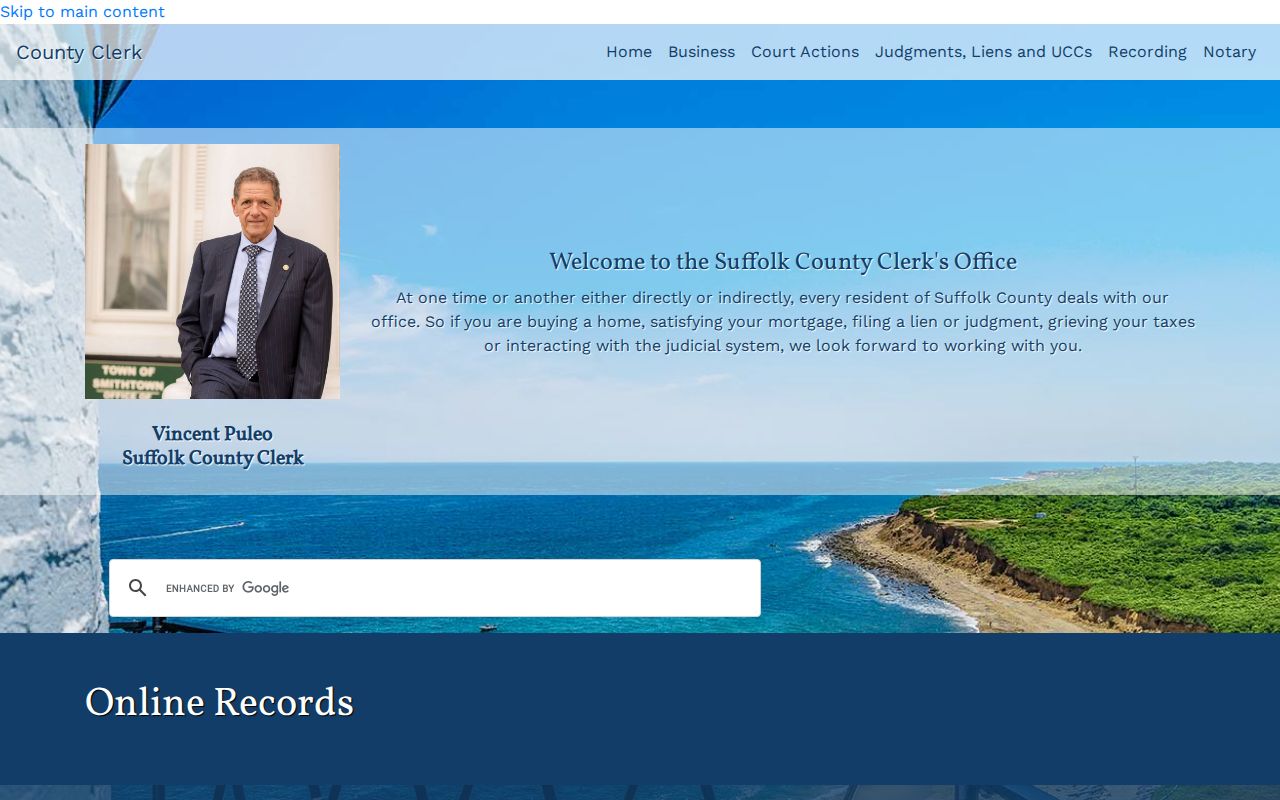
That split preserves the useful distinction between a free Smithtown index entry and the image, certified copy, or older book that may be needed for context.
Smithtown Offices Behind Resident Records
Several custodians make up the Smithtown records landscape. The Town Clerk keeps town-created records and serves as local registrar for eligible local vital-record requests. The Assessor maintains Smithtown parcel and assessment information. Suffolk County keeps the Smithtown deed index and administers local election records, while state systems provide the voter form and statewide vital-record routes. Contact the Smithtown office that holds the record, rather than asking one office to confirm a person from another office’s file.
Smithtown Town Clerk
99 West Main Street
Smithtown, NY 11787
631-360-7620
Municipal records route
Smithtown Assessor
40 Maple Avenue
Smithtown, NY
631-360-7560
Property and roll route
Suffolk County Clerk
Land records and indexed filings
Online and office access routes
631-852-2000
County records route
Suffolk Board of Elections
700 Yaphank Avenue
Yaphank, NY 11980
631-852-4500
Election-records route
The Smithtown Town Clerk page identifies the clerk as the municipal doorway for town records, marriage-license administration, and local birth, death, and marriage registers.
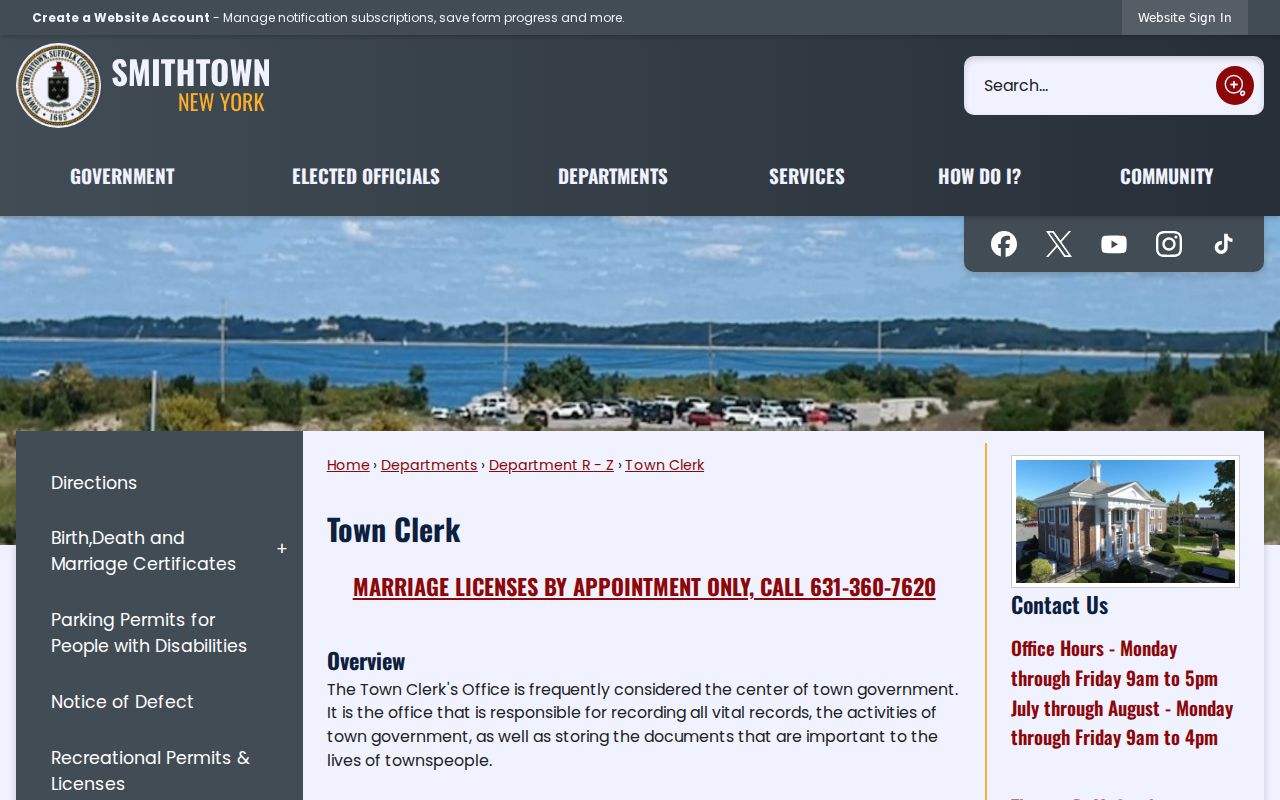
For a Smithtown record that is not published online, the Town Clerk can help identify the town office or copy route that actually holds it.
Current Smithtown Resident Record Sources
Current Smithtown directory research is a set of focused record trails, not a single roll. Each Smithtown source describes a different status: owner, registrant, court party, license holder, or historical subscriber. The strongest Smithtown answer comes from using the source that fits the question and keeping its limits visible.
| Smithtown source | What it can show | Custodian | Access route |
|---|---|---|---|
| Smithtown tax and assessment record | Listed parcel owner, situs, tax-map ID, and tax correspondence field | Town Assessor | Public BAS search and assessment-roll PDFs |
| Smithtown GIS tax-parcel layers | Parcel geography, address labels, hamlet, ZIP, and district overlays | Suffolk County | Public GIS viewer, not a legal survey |
| Smithtown land-record index | Parties to deeds, mortgages, liens, maps, and other filings | Suffolk County Clerk | Free public index; images have separate access |
| Smithtown voter lookup | Limited confirmation for a named registrant | New York State and Suffolk BOE | Individual form with required matching fields |
| Smithtown license and business filings | Credential or organizational affiliation | State and County offices | Official public search where offered |
| Library and historical sources | Older addresses, newspapers, obituaries, and local context | Smithtown Library and historical societies | Reference, remote inquiry, or onsite research |
For a one-person question, compare at least two independent Smithtown signals, such as a parcel and a recorded document, or a dated court index and a public license. A phone-directory entry, tax mailing address, or voter match alone does not establish current presence at a Smithtown address.
Note: A Smithtown tax mailing field can be useful correspondence information, but it cannot establish a current resident at that parcel.
Confirm Smithtown Voter Matches Carefully
The New York voter form is a narrow Smithtown confirmation tool, not a Smithtown residents directory. It asks for a county, last name, first name, date of birth, and ZIP information. Select Suffolk and use the full Smithtown matching details for one known person. A failed result may reflect a name variation, an inactive record, a recent change, a protected registration, or a mismatch in the form’s conditions. It does not prove that a person never lived in Smithtown.
The New York Voter Lookup presents the individual registration and poll-site route used for this limited check.
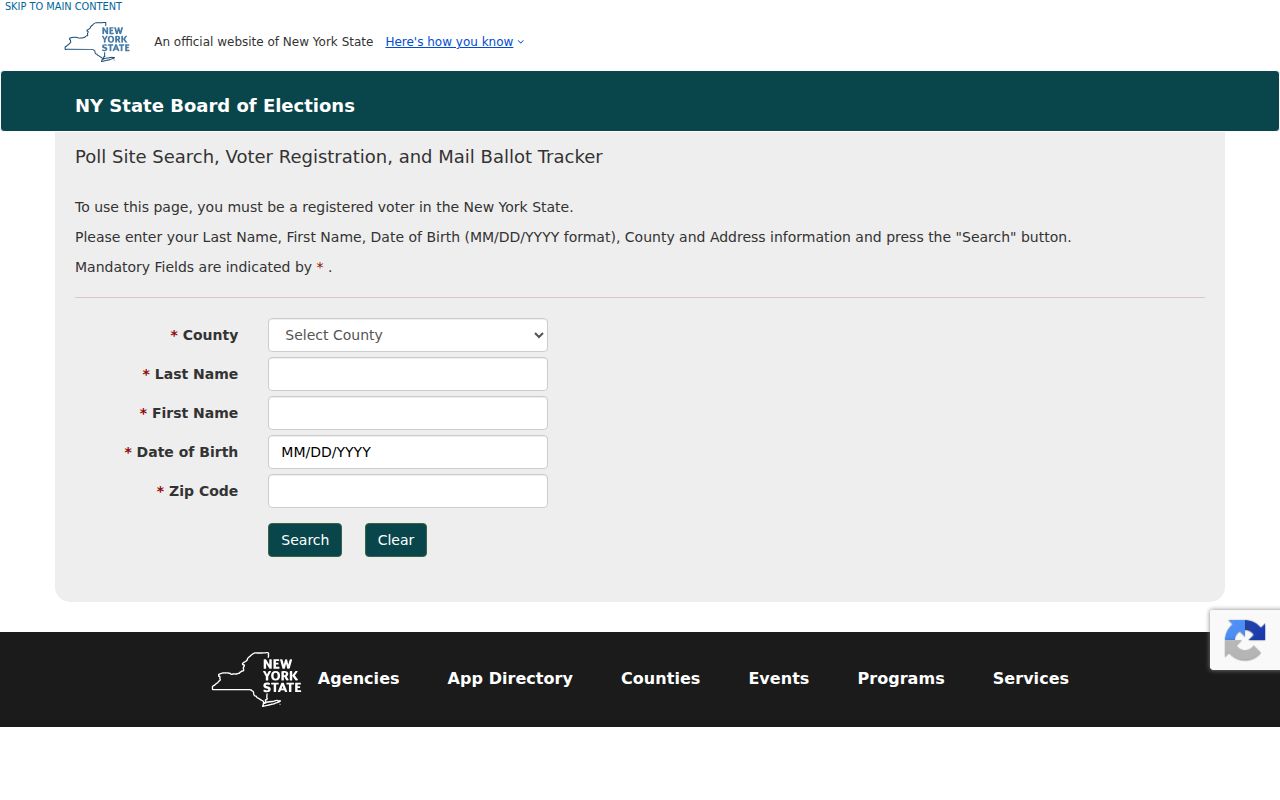
Protected voters and Address Confidentiality Program participants have separate safeguards, and ballot choices are never public results. Requests for fuller voter data are written, purpose-limited requests under New York election law.
Smithtown Court Searches Use SM
Smithtown’s local civil-court route is Suffolk District Court’s Fourth District in Hauppauge. In WebCivil Local, the Smithtown court suffix is SM. A party search can be narrowed by name, party role, court, case type, year, case status, and future appearances. The portal generally makes CV, CC, and SC matters filed since 2008 available, while LT material has a narrower availability window.
A docket is the Smithtown court’s case index and event trail, not a complete account of a person’s life. Party role, filing date, case type, and court are essential when several people share a Smithtown name. E-filed matters can have a separate NYSCEF route, and sealed, adoption, juvenile, youthful-offender, family, and other sensitive records remain restricted. Note: A public case row may confirm an indexed party, but it does not necessarily provide every paper or final disposition.
Smithtown Vital Record Routes
For a recent Smithtown birth, death, or marriage event, begin with the Town Clerk and the particular Smithtown copy rules for that record. Certified copies are not open like a general directory search. The local marriage-certificate route, for example, limits certified copies to a spouse or government agency and uses identification requirements. A Smithtown local registrar is useful for qualifying town-held records, while the New York State Department of Health keeps statewide copies outside New York City.
Historical genealogy access follows different rules. New York generally opens births after 75 years and deaths after 50 years; marriages generally require 50 years and evidence that both spouses are deceased, with stated exceptions. The DOH-4384 genealogy application is a state mail route for qualifying searches and copies. Older Smithtown questions may also need Smithtown newspapers, probate, church, cemetery, archive, or historical-society research when a vital index alone is not enough.
Note: A genealogy age rule opens a research route, but it does not make a recent Smithtown certificate public to everyone.
Cross-Check Smithtown Names by Date
Names are easy to overmatch in Smithtown. A Smithtown person can appear under a maiden or married name, middle initial, suffix, hyphenated form, apostrophe, trust, estate, or business entity. Start with the surname alone where the Clerk permits it, then use a first name, date range, legal description, tax-map number, or party role to narrow the result. The point is to separate two people with a shared name, not to collect every matching row.
Dates make the Smithtown record trail more reliable. A deed recording, assessment year, voter-registration status, court filing, license date, marriage, death, or obituary each describes a moment. A license can show a business location, an obituary can give a last residence, and a tax mailing address can be somewhere else. Smithtown resident research improves when those dated clues agree and the record custodian can correct an error.
Smithtown Geography Changes Searches
Smithtown is a town with six named hamlets: Kings Park, Smithtown, St. James, Nesconset, Commack, and Hauppauge. It also includes parts of Fort Salonga and Lake Ronkonkoma. Village of the Branch, Head of the Harbor, and Nissequogue are incorporated villages within the broader town geography. A Smithtown address can therefore carry a postal label, village contact, school district, fire district, ZIP, or hamlet name that does not neatly match the town name.
Commack and Hauppauge cross into neighboring towns, while Fort Salonga and Lake Ronkonkoma add more boundary overlap. The Suffolk GIS Viewer can display Tax Parcels, Address Labels, Hamlets, Town Boundaries, ZIP Codes, villages, and districts. For a Smithtown parcel that seems to have conflicting place names, use the tax-map identifier and legal description as the stable connection rather than treating a postal label as a government boundary.
Note: Smithtown town, village, hamlet, and postal labels may all be correct for one parcel.
Smithtown Official Records and Listings
Official Smithtown and Suffolk records usually have a named custodian, a record type, and a date. Commercial Smithtown directory services may combine public filings, marketing data, licensed data, and address history into a fast summary. That summary can be a lead, but it can also merge names, lag a Smithtown official correction, or leave out the record context needed to identify the right person.
| Record path | Strength | Limit to remember |
|---|---|---|
| Smithtown or Suffolk official index | Identifies the custodian, record category, and dated filing or parcel | May show an owner, party, or registrant rather than a present household |
| Commercial directory category | Can suggest names or old addresses to verify | Can contain stale or merged data and lacks the official record chain |
Smithtown Resident Records Terms
Smithtown records use terms that can look more certain than they are. Keeping the terms separate prevents a parcel, filing, or historical listing from being mistaken for a current household record.
- Assessment roll
- A Smithtown property list that can show a tax-map number, location, class, assessment, exemptions, and owner fields for an assessment period.
- Parcel and situs
- A parcel is a mapped piece of land. Its situs is the physical parcel location, which can differ from a tax mailing address.
- Index and image
- A Smithtown index is a finding tool with selected record fields. The underlying deed image or certified copy may require a different access route.
- Grantor and grantee
- In a deed trail, the grantor transfers an interest and the grantee receives it. Those roles help trace a Smithtown ownership chain backward.
- Criss-cross directory
- A Smithtown address-first historical directory, when held by a library collection, that can help connect an older street entry to a surname and year.
Earlier Smithtown Resident Directories
Historical Smithtown resident directories are a collection search rather than a verified single publisher run. The strongest documented telephone material includes West Suffolk County runs for 1932, 1937/38, and 1940/41, plus Tri-Village Area runs from 1932 through 1992/93. The Long Island Room, newspapers, family papers, maps, and local-history materials can supply an older address or association that modern record systems do not show. Search Smithtown Branch, township, village, exchange, and postal-name variations when a historical name does not match today’s wording.
The Smithtown Library Long Island Room is the principal local-history reference route, although the room is closed until further notice during flood recovery and planned relocation.
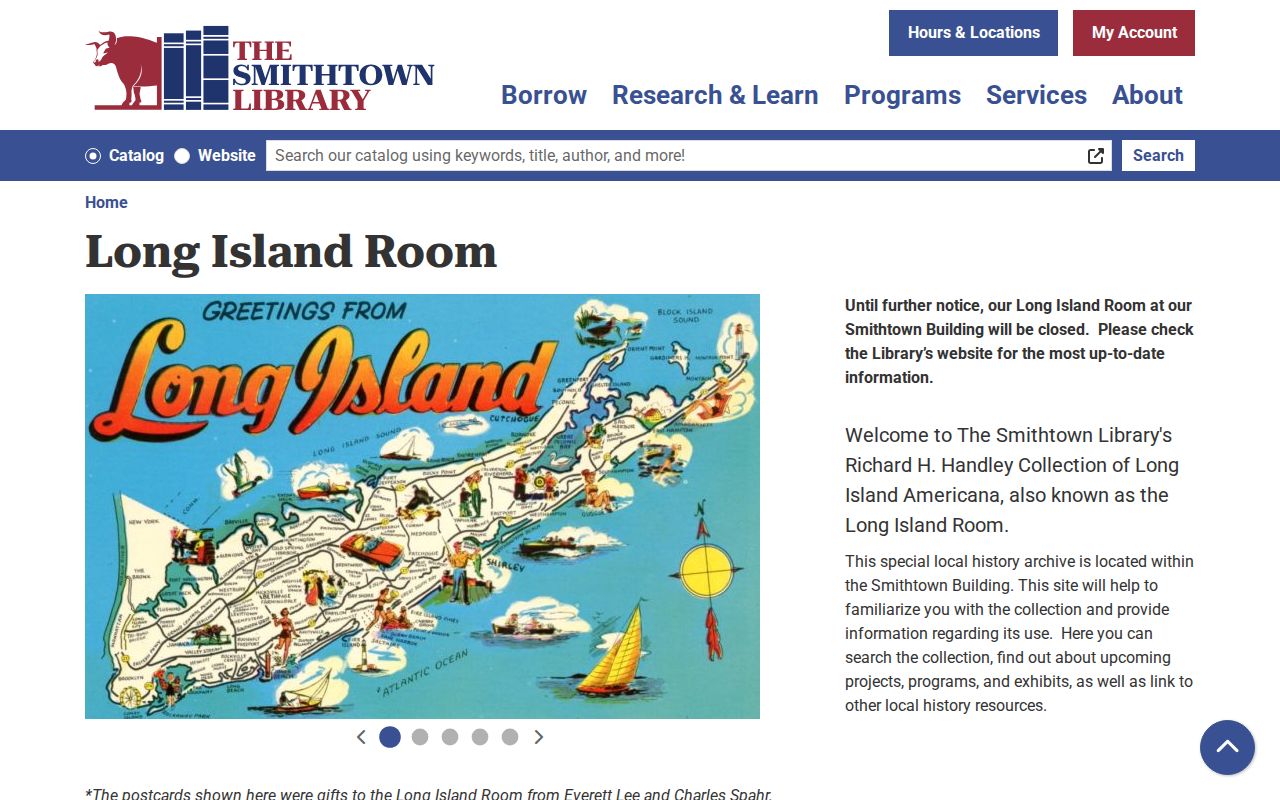
Phone or email reference is the prudent first step for a Smithtown historical directory question; the Library lists the Long Island Room at 631-360-2480 extension 197 and longislandroom@smithlib.org. The Smithtown Directory Book follows the historical collections in more detail.
Note: A historical Smithtown telephone entry is a dated subscriber clue, not proof of a continuing address.
Smithtown Records Access Is Changing
Smithtown’s online record trail is still growing. New York State Archives grant lists show Town of Smithtown awards titled “Document Conversion and Access” in 2021–22, 2023–24, and 2024–25, but do not identify the exact record series or release date. The NYS Archives grant information is useful context, not proof that a particular Smithtown document has been digitized.
Library access also remains fluid after the August 2024 flood that damaged the lower level. The Smithtown Library updates report first-floor reopening in May 2025, second-level reopening in September 2025, and continued lower-level work in 2026. Verify Smithtown collection availability before planning a visit. When a Smithtown record is not online, a focused FOIL request should name the custodian, existing record, date or address, and desired format rather than ask an agency to identify a person.