
Smithtown Previous Residents by Era
A good address history starts with the source that fits the period, then moves back one dated layer at a time. County land custody reaches much farther than the online search, while library and archive material can describe the household side of the story. For previous residents, an owner, a subscriber, and a person named in an obituary are separate records. They may connect, but the connection should be tested with address, date, and family context.
| Address-history source | Years or period | Where held | What it can show |
|---|---|---|---|
| Suffolk County Clerk land index | Online records generally 1987 to present; land custody to the 1660s | County Clerk search, counter, microfilm, and archives | Grantor, grantee, document type, recording date, placement, and parcel clues |
| Smithtown assessment record | Current and prior roll ranges | BAS search and assessment-roll PDFs | Present parcel identity, owner entry, situs, mailing field, class, and tax map |
| Telephone and reverse-directory leads | West Suffolk 1932, 1937/38, 1940/41; Tri-Village 1932 to 1992/93 | NYS Library microforms and Smithtown Library reference | Dated subscribers or address trails; exact local reverse run needs confirmation |
| Federal census | 1790 to 1950 public schedules | Library databases, FamilySearch, and census repositories | Household composition and location context by enumeration district |
| Permits, newspapers, and obituaries | Collection- and file-specific | Town Building Department and local-history collections | Property changes, family transitions, and dated community notices |
If the question concerns a transfer, start with the parcel and deed. If it concerns a household, use the deed as an anchor and add library, newspaper, or census evidence around the right years.
Fix the Smithtown Parcel First
Before tracing past residents, capture the address as written, the tax-map or DSBL identity, the property location, and any alternate hamlet or postal label. Smithtown's BAS tax search accepts a Bill number, Tax Map number, Property Address, or Owner Name, one key at a time. For an address search, the town instructs users to omit the street type. An owner search is normally last name first, and a surname-only search can help when the full name does not match.
The parcel's situs address is its physical location. Its mailing address is tax correspondence information and may be elsewhere. The legal description and tax-map identity carry the trail when street spelling, a village name, or a Northport, Hauppauge, or Ronkonkoma postal label creates confusion. The Suffolk GIS Viewer can place the lot against town, hamlet, village, ZIP, and road layers before the historical work begins.
Smithtown's 1987 Deed Index Divide
The County Clerk's land-record story has two layers. Its public online records are generally described as beginning in 1987, while the office holds land material reaching to the 1660s. A prior-owner search that ends online has not necessarily reached the end of the chain. It has reached the web layer. Earlier material can require a Clerk counter search, deed-book or microfilm guidance, Records Management Center help, paid image access, or a certified-copy request.
The free public result can still show parties, document category, recording date, liber/page or document placement, and notation fields. Full images are an enhanced-access or counter question. Recording date is not necessarily the date the parties closed their transaction. That distinction matters when building a credible trail for previous residents.
The County Clerk Records Management Center is the retention and preservation route for county material that is not a general walk-up web database.
The records-management route helps explain why an older Smithtown document can exist even when its index image is not immediately available online.
Trace Smithtown Previous Residents Through Deeds
The deed chain is the ownership spine for a Smithtown house history. Start with the current assessment entry and parcel identity. Search that owner as a grantee in the Suffolk County Clerk portal, choose a useful date range and a deed or mortgage category, then inspect the detail row. The seller on an acquisition deed becomes the next backward search. Estates, trusts, corporations, subdivisions, and mergers need their own name checks.
- Record the current parcel's tax-map number, situs address, and owner entry from the Assessor or GIS.
- Search the owner as a grantee. Use Starts With or Exact and narrow dates when the name is common.
- Note parties, recording date, document type, liber/page or document number, and the legal-description or tax-map clue.
- Search the seller or prior grantor as a grantee in an earlier period, then repeat until the online cutoff or a parcel change.
- When the record trail predates the web layer, ask the Clerk about deed books, microfilm, counter access, or a certified copy.
- Grantor and grantee
- A grantor conveys an interest in a deed; a grantee receives it. The direction of the names controls the backward search.
- Chain of title
- The dated sequence of transfers that connects one legal parcel identity to earlier owners.
- Legal description
- The lot, map, bounds, or tax-map description used to identify land when a street address changes or repeats.
- Liber and page
- A book-and-page placement reference used in older recorded-document systems.
Smithtown Past Residents in Directories
A transfer tells who held title, not necessarily who lived there. To study past residents, pair the transfer period with a telephone, reverse-directory, newspaper, or census source. The documented NYS Library telephone runs include West Suffolk County for 1932, 1937/38, and 1940/41, plus Tri-Village Area volumes from 1932 through 1992/93. Smithtown's exact printed city-directory publisher and reverse-directory runs were not verified, so ask the Long Island Room rather than filling the gap with a guessed title.
A workable household sequence is address and parcel, nearest directory year, corresponding census, then newspaper or obituary evidence for a change between those dates. Postal exchange, village, township, and enumeration-district labels can differ. The historical collections themselves are described on the Smithtown directory book page, while this trail stays focused on one address.
Note: A telephone subscriber or directory entry is dated contact evidence, not proof that the subscriber owned the home or remained there afterward.
Smithtown House-History Help at the Library
The Smithtown Library Long Island Room is the main local reference route for old addresses, family names, maps, photographs, business papers, newspapers, and ephemera. Its Richard H. Handley Collection includes about 8,400 books, 750 maps, and 200 archival boxes. The materials are reading-room resources, not circulating items. Staff can be reached through the Long Island Room page by phone, email, or appointment request.
Access needs a current check. The room is listed as closed until further notice after flood recovery and planned relocation. A remote reference question that includes an address, older street form, surname, and date range gives the staff a useful starting point. The Suffolk County Historical Society in Riverhead is a second research-library route, with Saturday appointments and a documented nonmember fee.
Check the Historical Society's research-library access information before planning an older Smithtown address search.
Its onsite route can supplement the library when a property story needs local books, manuscripts, or newspaper context.
Smithtown Previous Residents at Life Events
Obituaries, probate, and vital-record routes can help close or extend a family trail. For a local recent event, the Smithtown Town Clerk is the registrar contact. Older genealogy research can move through the New York State Department of Health and the State Archives. The genealogy route generally opens births after 75 years and deaths after 50 years, while marriages generally require more than 50 years and both spouses known deceased, subject to the documented exceptions and eligibility conditions.
DOH's genealogy guidance and DOH-4384 application distinguish a genealogy search from a recent certified record request. The State Archives holds index and research guidance, not ordinary certificates. A death notice may identify relatives or a last residence, but it still needs corroboration with a deed, probate filing, or another dated record.
Review New York genealogy eligibility rules before treating a vital record as available.
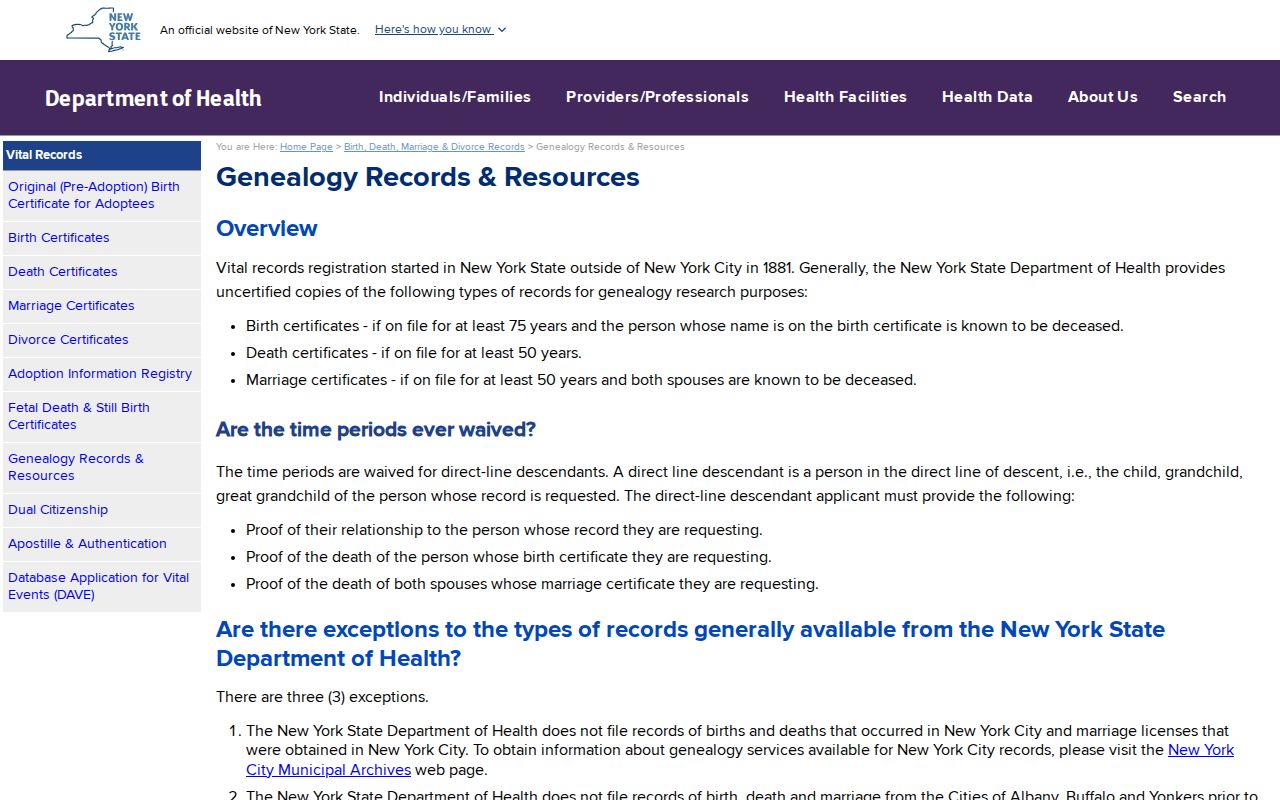
The genealogy route is best used for historical family work, not as a shortcut to restricted recent records.
The New York State vital-records service explains the distinct statewide copy routes and the treatment of divorce certificates.
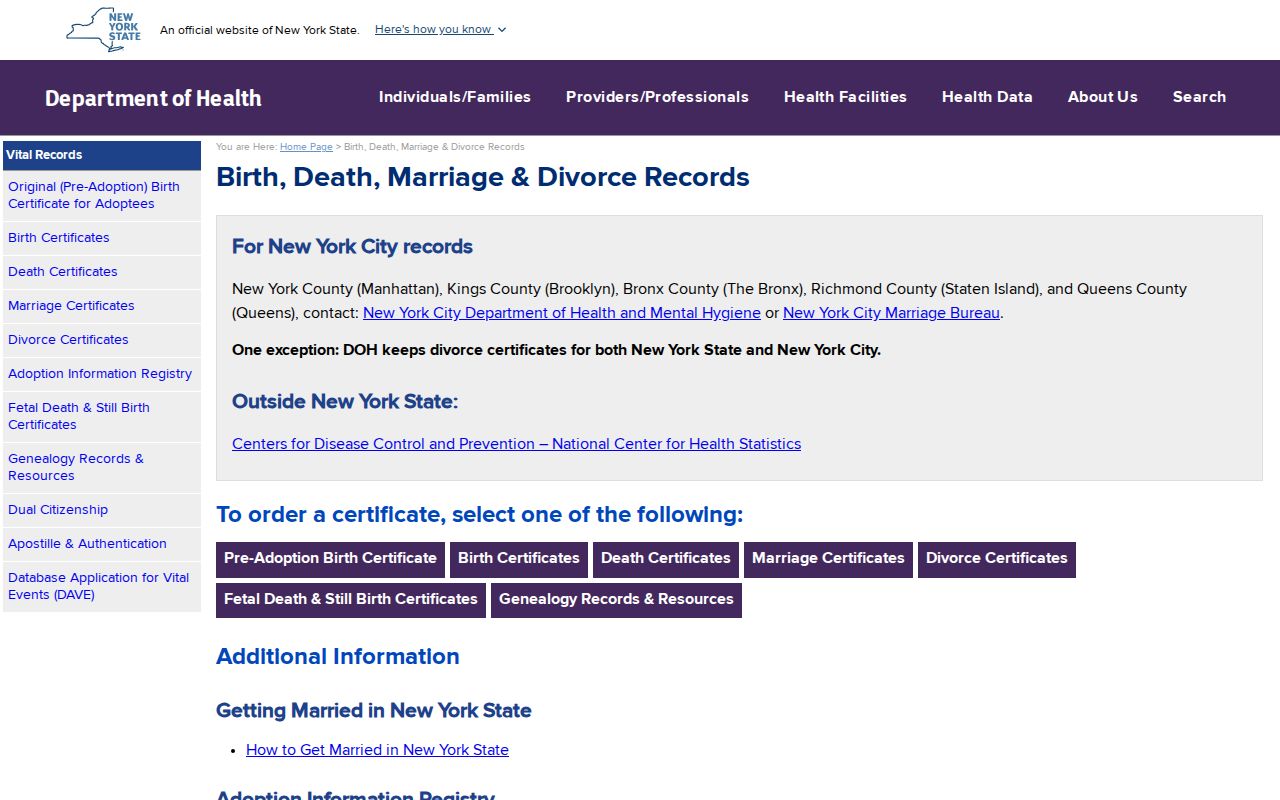
That official service is a custodian route, so its eligibility rules take priority over an address-history research goal.
Smithtown Previous Residents Before Registration
Statewide vital registration began in 1880 to 1881, but the New York State Archives cautions that early compliance was incomplete until 1913 or later. For an earlier Smithtown address or family, use church registers, cemetery material, newspapers, probate, land records, the Smithtown Historical Society, and the Library of Congress's indexed 1898 town-record volume. No complete official inventory of local church-register years or cemetery entries was located in the research.
The State Archives birth, marriage, and death guide describes index limits and the local-registrar distinction. It is a research path, not a promise that every Smithtown name has a searchable record.
Use the New York Archives guide when the address trail reaches an early family event.
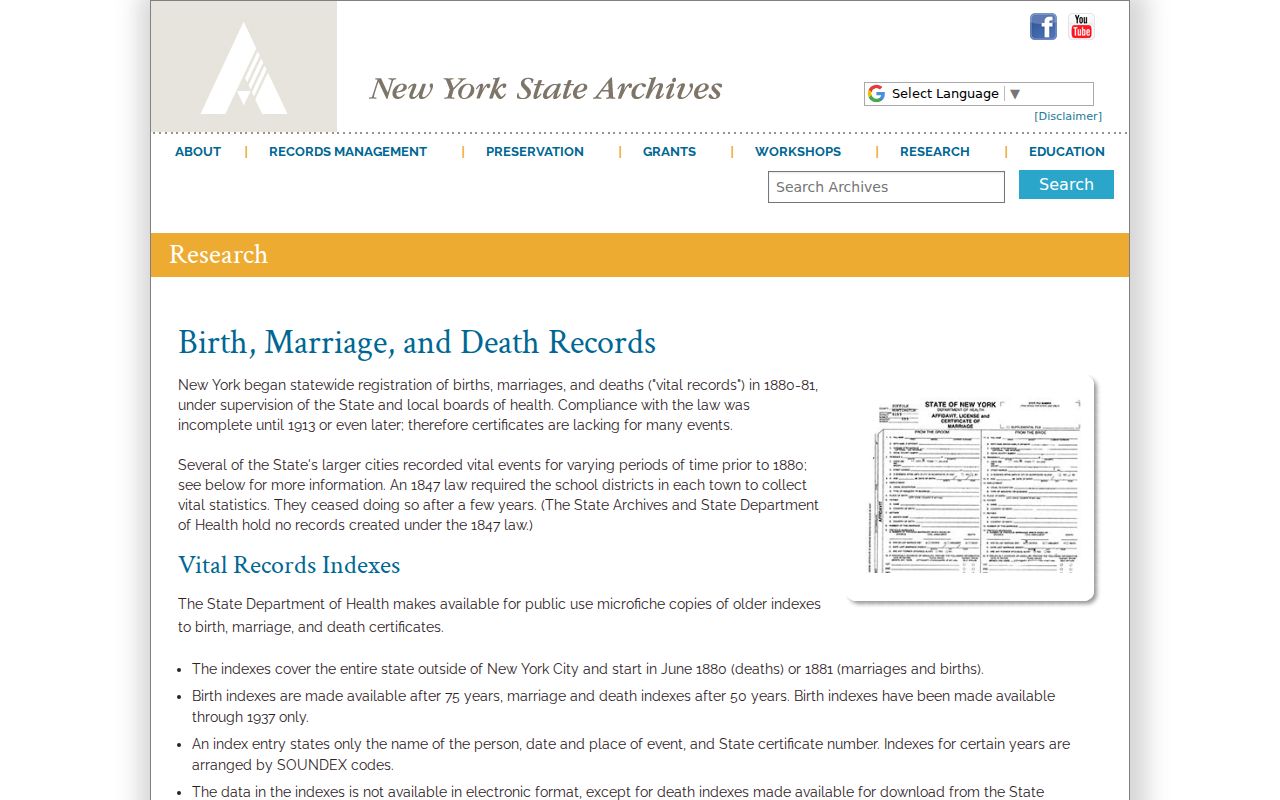
Archive finding aids can point to the right series or local repository even when the underlying document has not been digitized.
Smithtown Previous Residents and Permits
Smithtown building records add a property timeline around the people trail. The online residential permit service links applications, property details, certificates, inspections, and status information. Older structures can require staff assistance, a History Letter, or a Letter in Lieu. A permit or certificate records work on an address, not who occupied it.
The separation is useful. A deed can date an ownership change, a permit can date an alteration, and a directory or census can provide a household clue. Combining the three in order is stronger than relying on any one of them.
Limits on Smithtown Previous Residents
Some parts of an address history are not public. Utility accounts, DMV addresses, confidential voter records, sealed files, and the identity of a current non-owner are not supplied by the deed and tax trail. A mailing address is correspondence data, not a residence finding. A census, telephone listing, or obituary is also dated evidence, which means it can document a past household without proving a later one.
Use a narrow FOIL request for an existing non-exempt record when the online route stops. Ask the custodian for a record type, date, address, and format rather than asking an agency to identify a person. New York's Address Confidentiality Program and protected-voter rules must be respected.
Lawful use. Smithtown house-history research is suited to family history, estate matters, and personal curiosity. Never use a previous-resident trail to stalk, harass, threaten, or harm a living person.